Designing GenAI-Powered Tools at Scale

My role
Product Designer - Freelance
Timeline
Q1 2024- Q4 2024
Company stage
Enterprise
Team
Spread across 5 Product Teams
Context
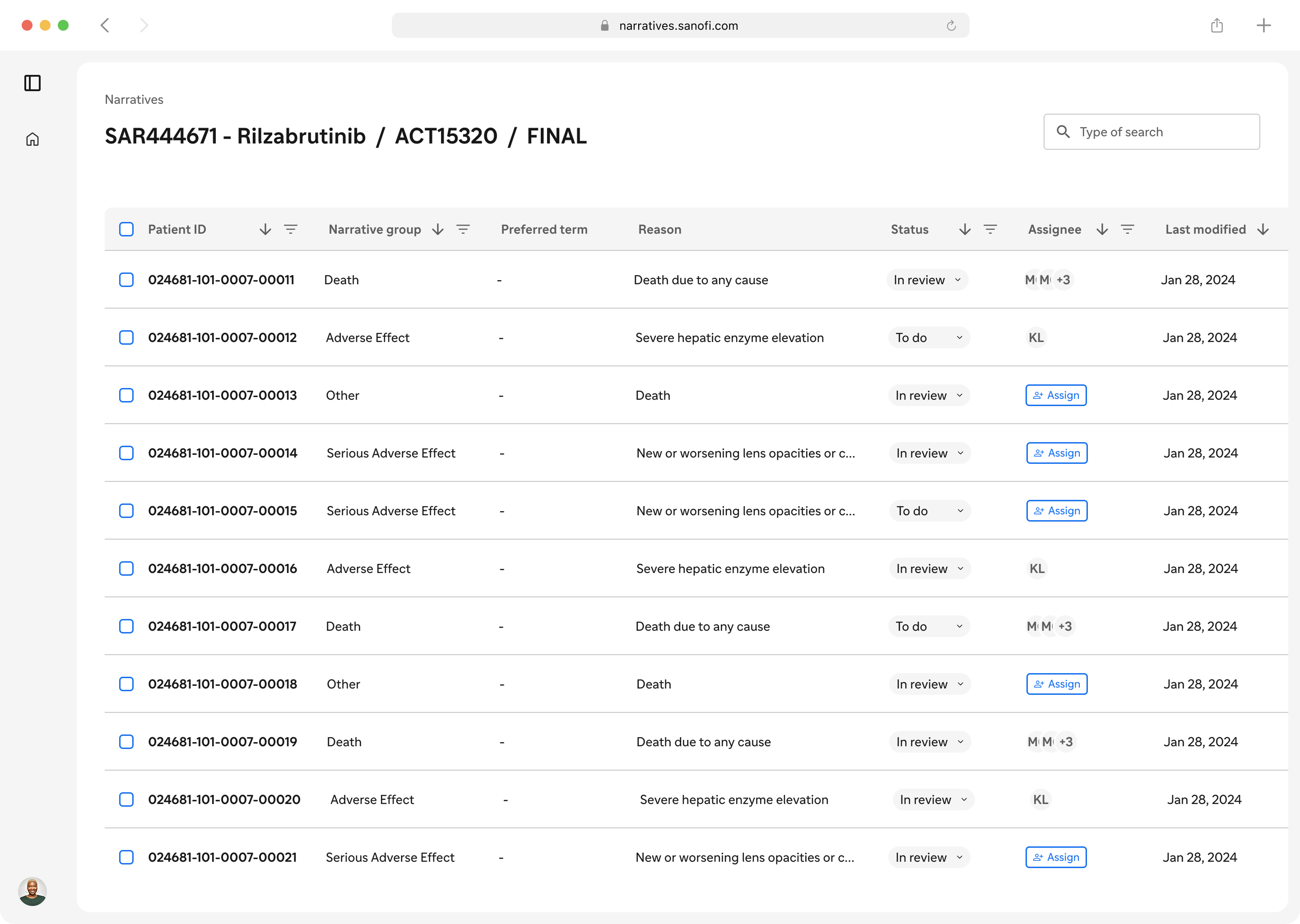
Sanofi was building product for the first time. Five AI teams had spun up in parallel to modernize medical writing workflows, each moving fast with no shared design foundation. I was the first product designer to join, embedded across all five. I could have designed each product in isolation. Instead I treated them as one system, and built a shared foundation that later designers across the organization worked from.
The problem
Working in the dark
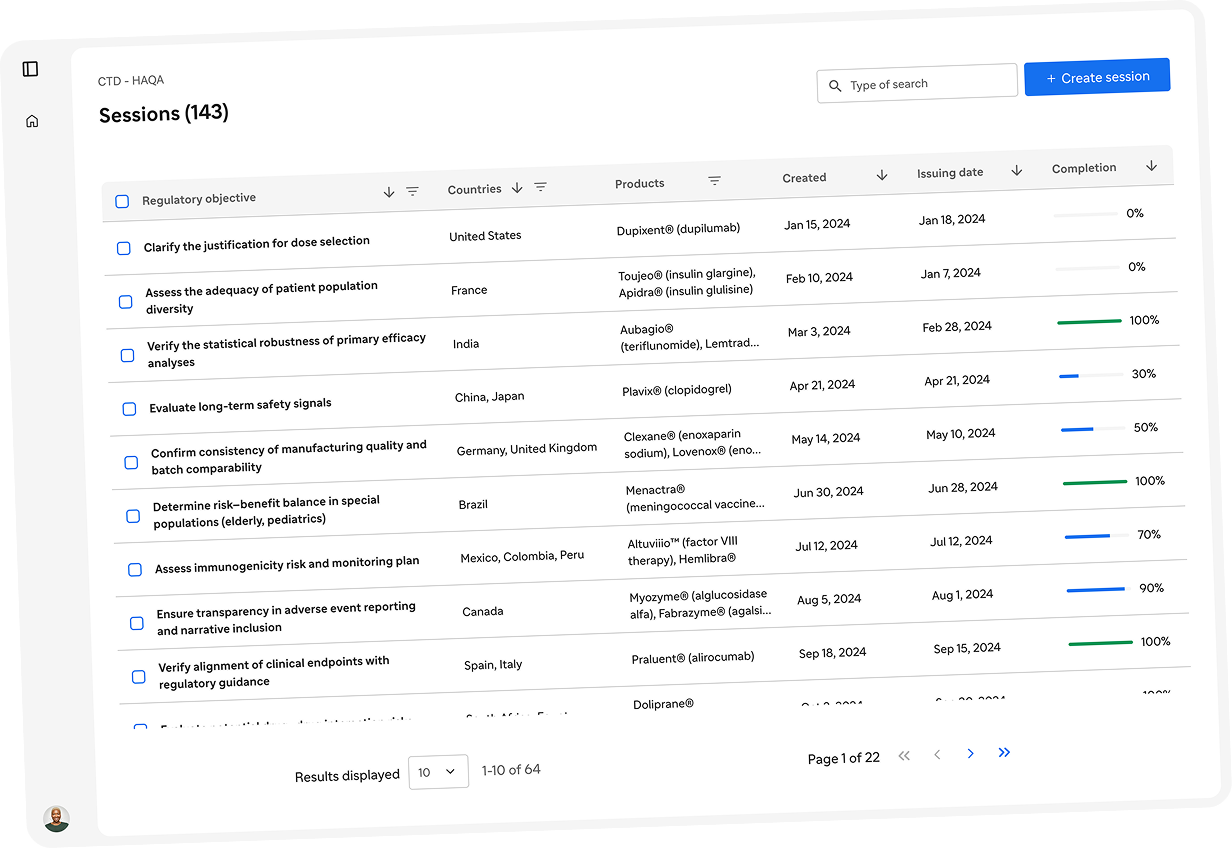
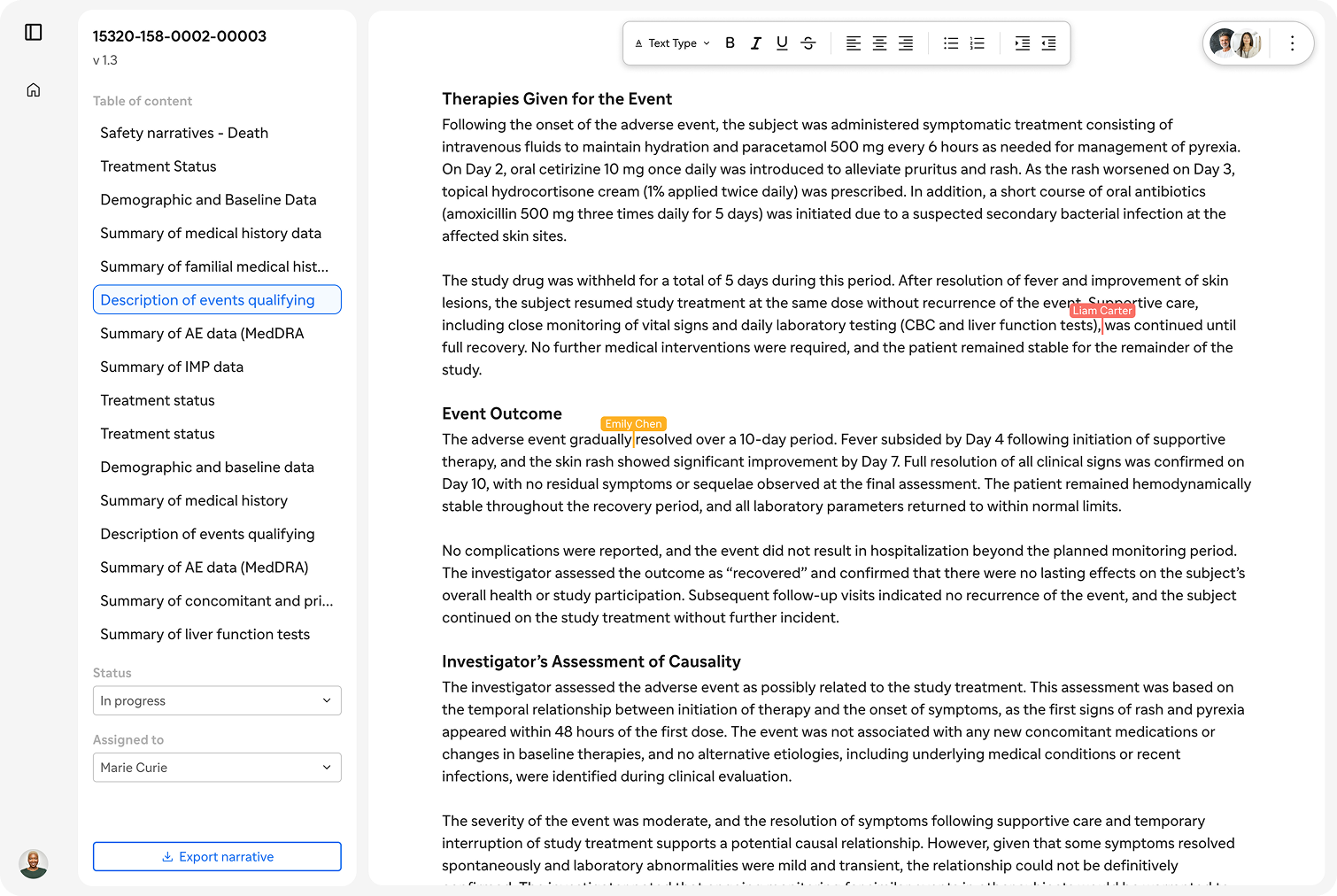
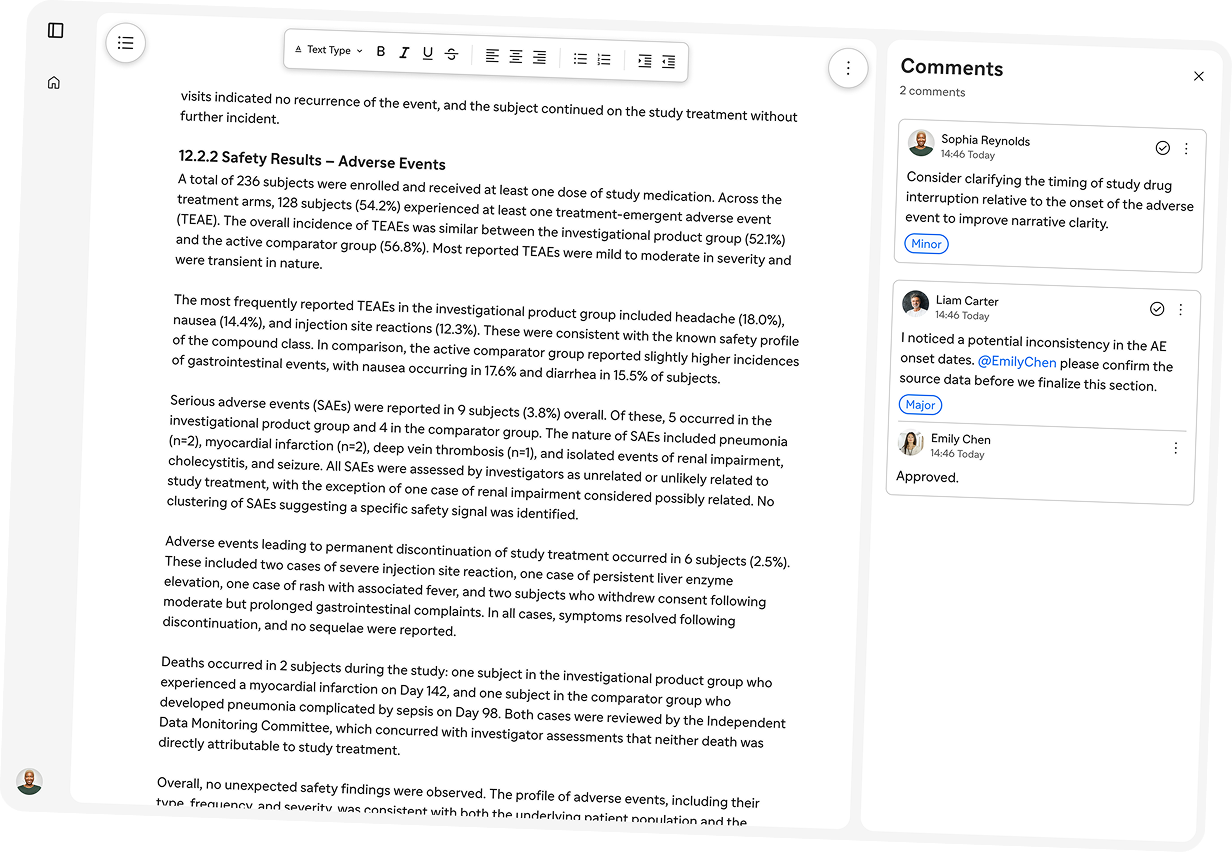
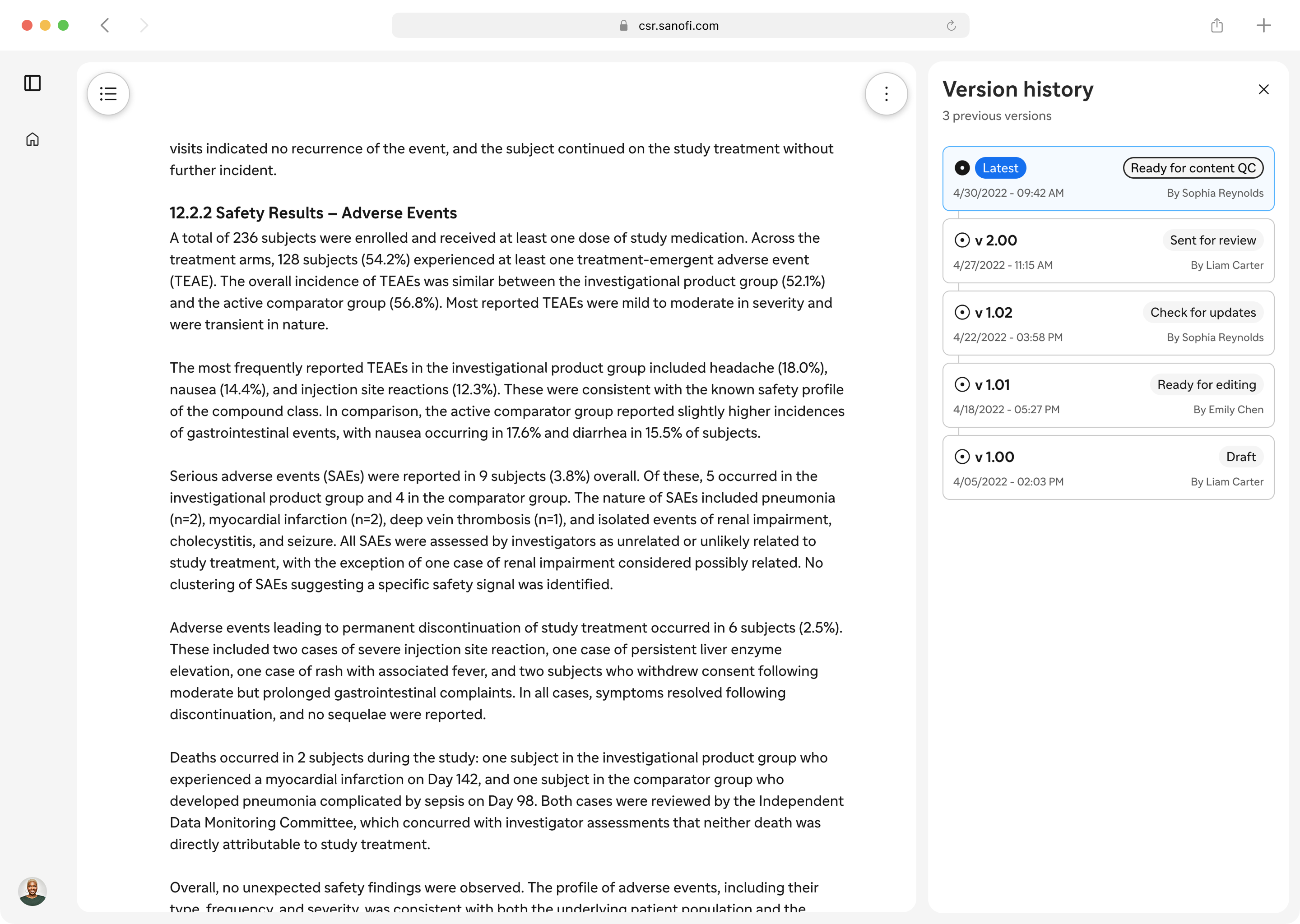
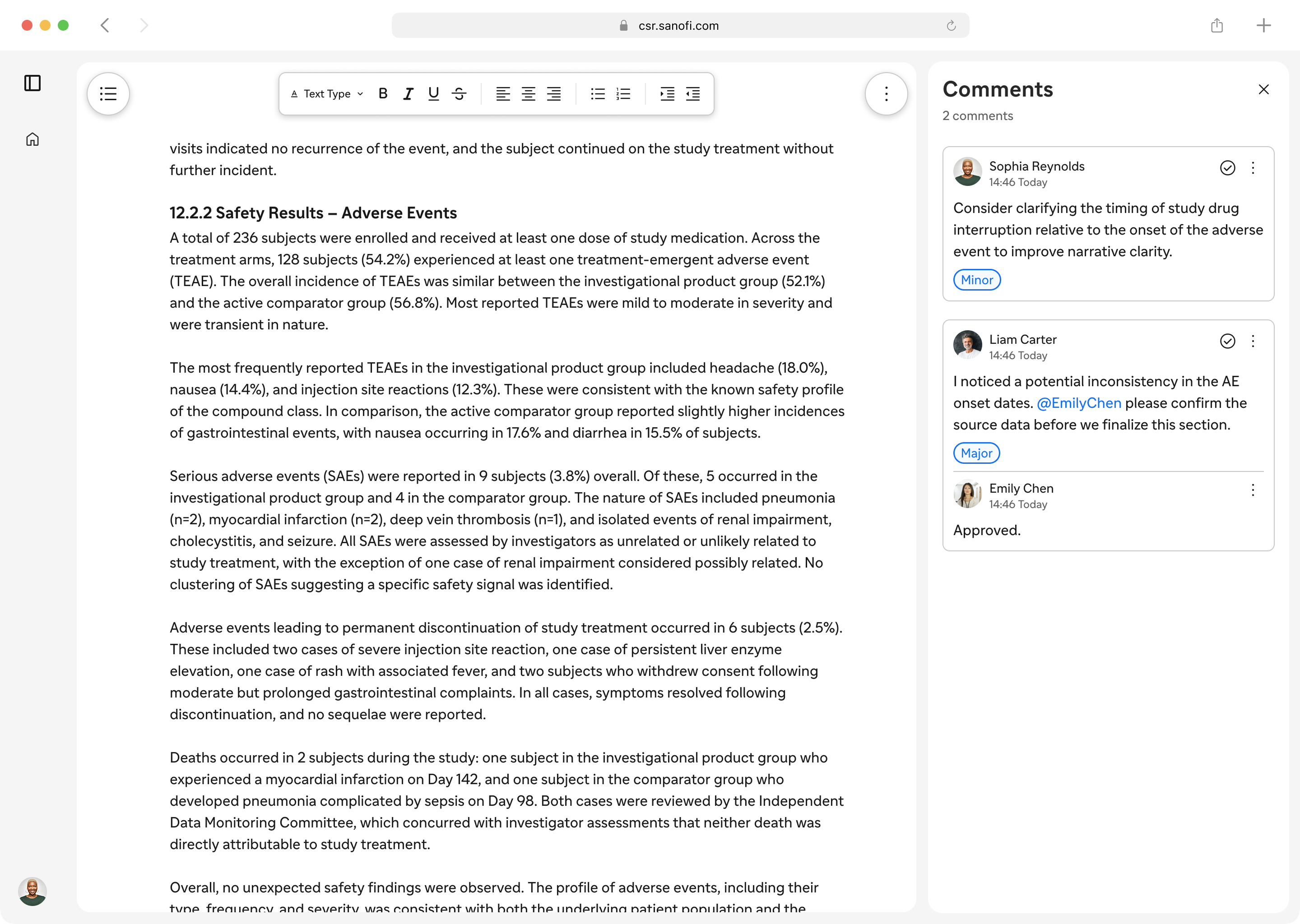
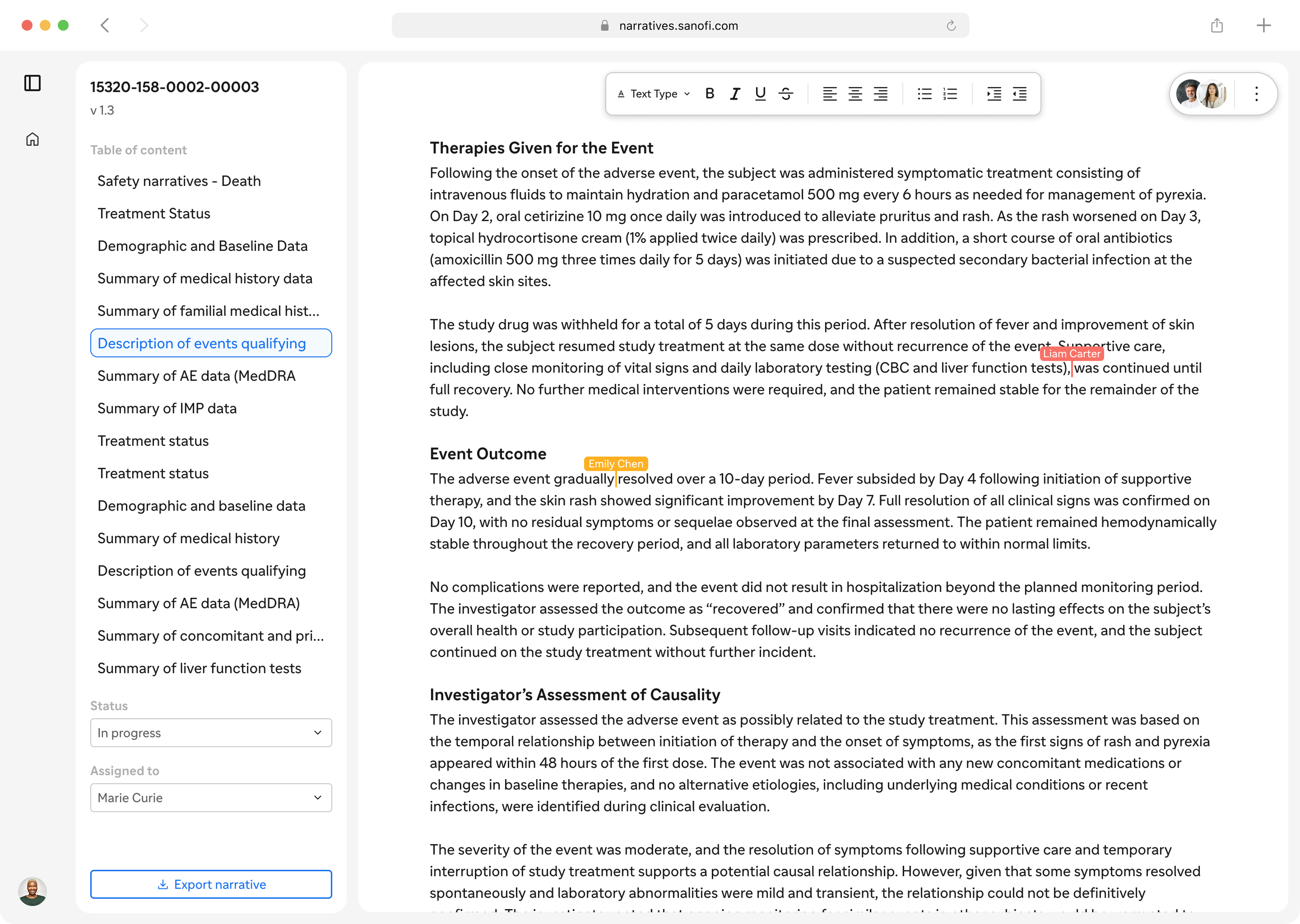
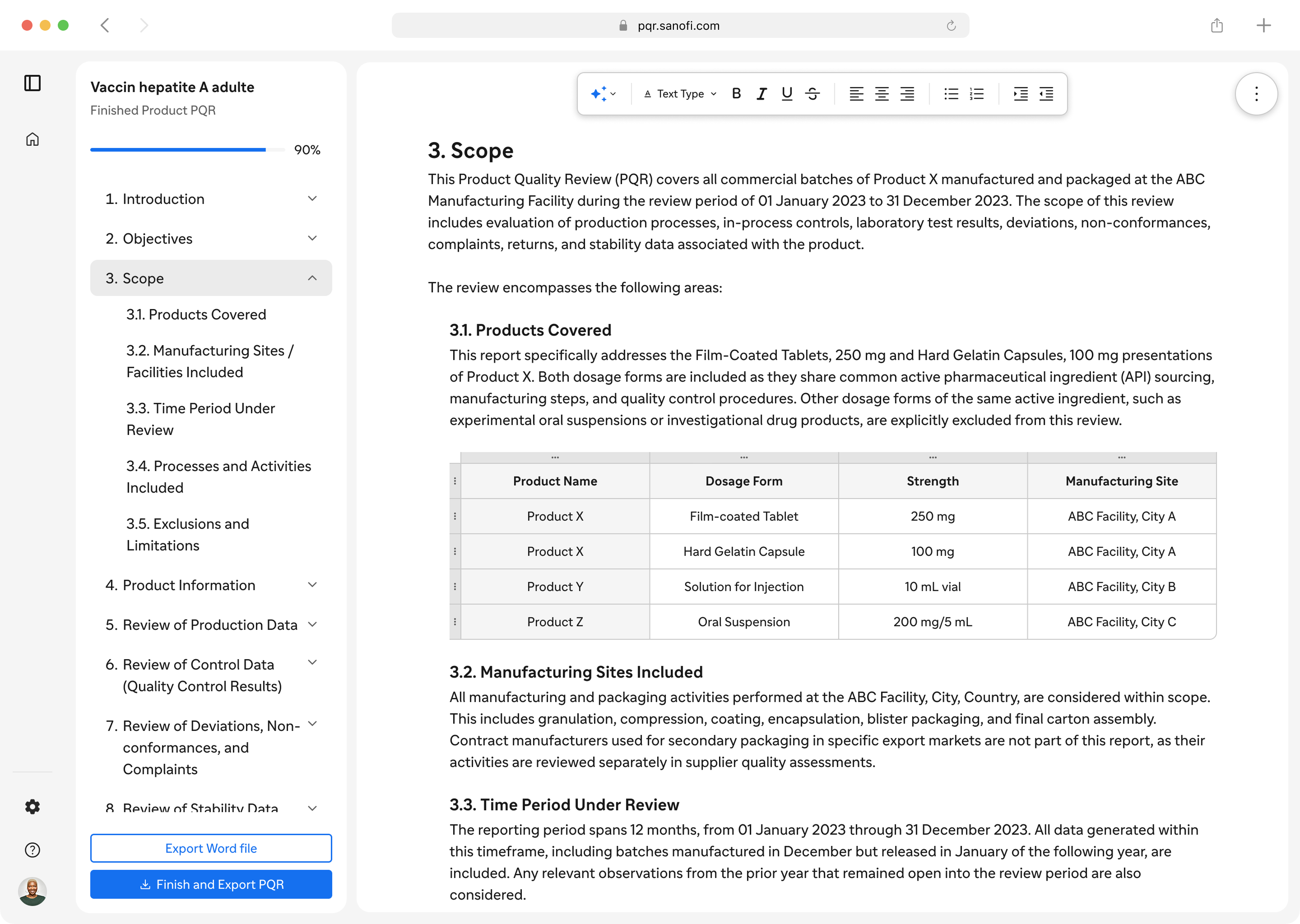
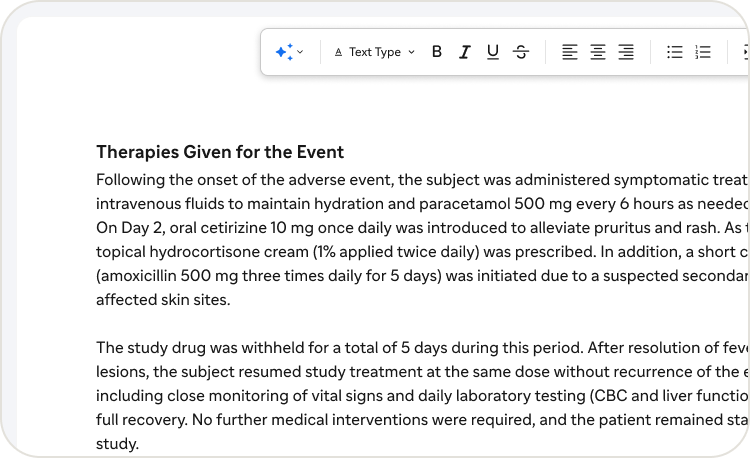
Medical writers were producing complex, heavily regulated documents using Word files with no versioning, no collaboration, and no structured templates. Every first draft started from scratch, and inconsistencies crept in even on documents that followed the same format every time.
The cost of slow
The shortest documents took 150 to 300 hours to write. The longest required up to 1,500. In an industry where regulatory submissions directly affect time to market, that pace wasn’t just inefficient. It was a competitive liability.
Framing
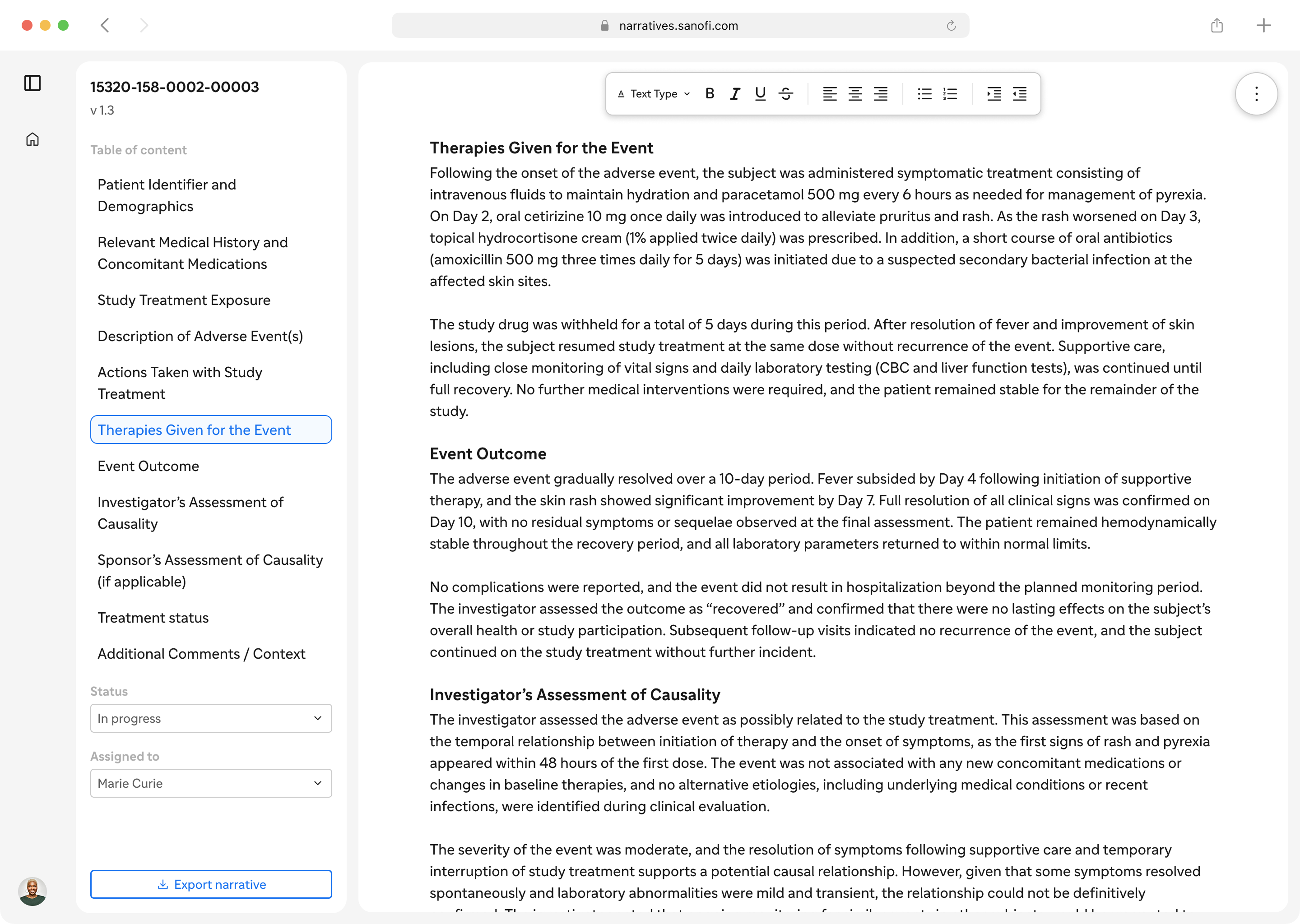
Before designing anything, I stepped back from the individual products and looked at the workflows at a high level. Underneath the surface differences, the same skeleton kept appearing. Building from that common structure meant the foundation would be strong enough to hold whatever came on top.

Goals

Tools that fit the work
Medical writers needed tools that matched how they already thought about their work, not ones that required them to adapt. The bar was simple: intuitive enough to use without training, useful enough to change how they worked.
Patterns that outlast the project
With multiple products in flight, every design decision was an opportunity to build something reusable. The goal was a shared foundation that other teams could build on, not a collection of one-off solutions.

Custom tools within a broad system

Design for now and the unknown
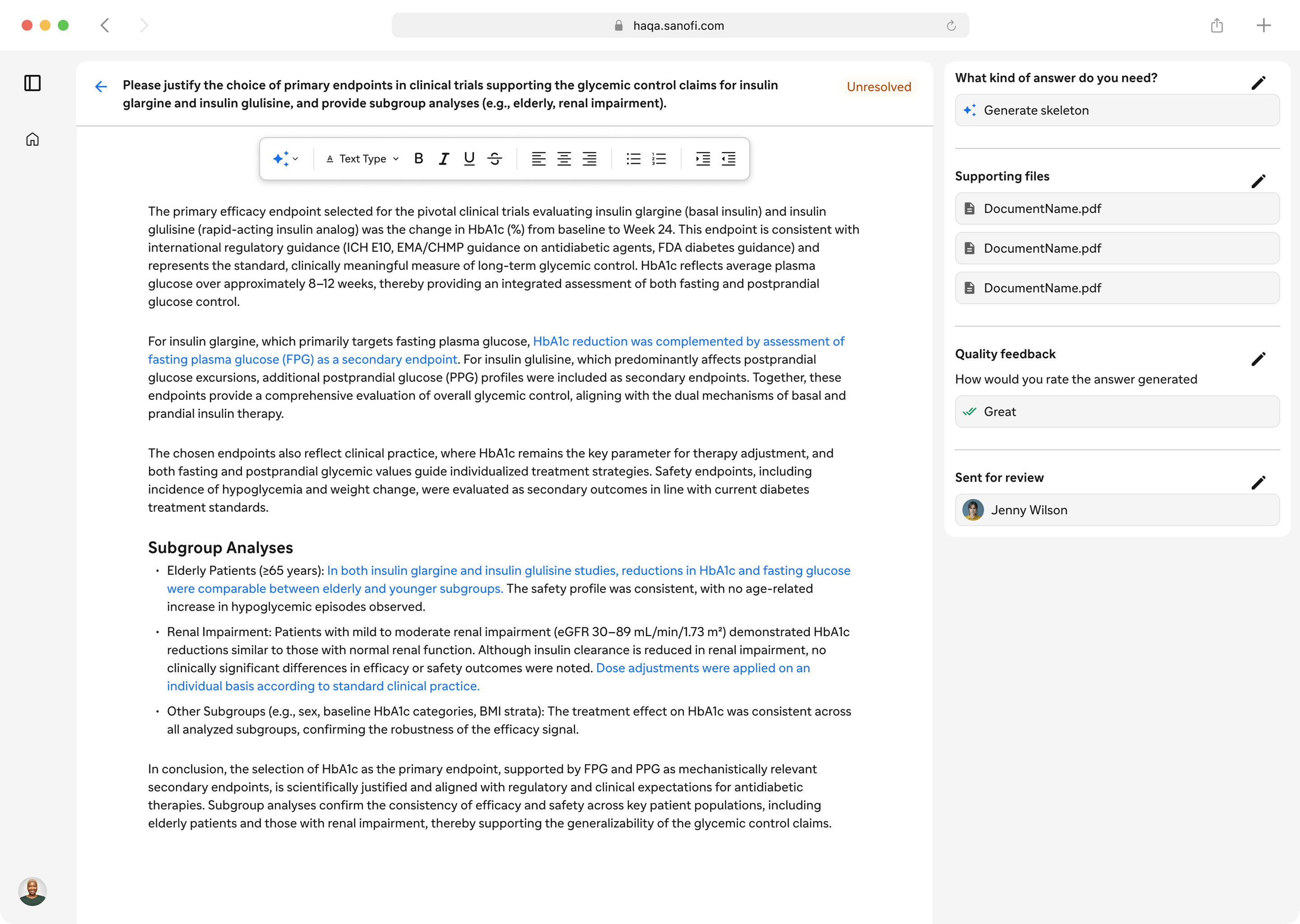
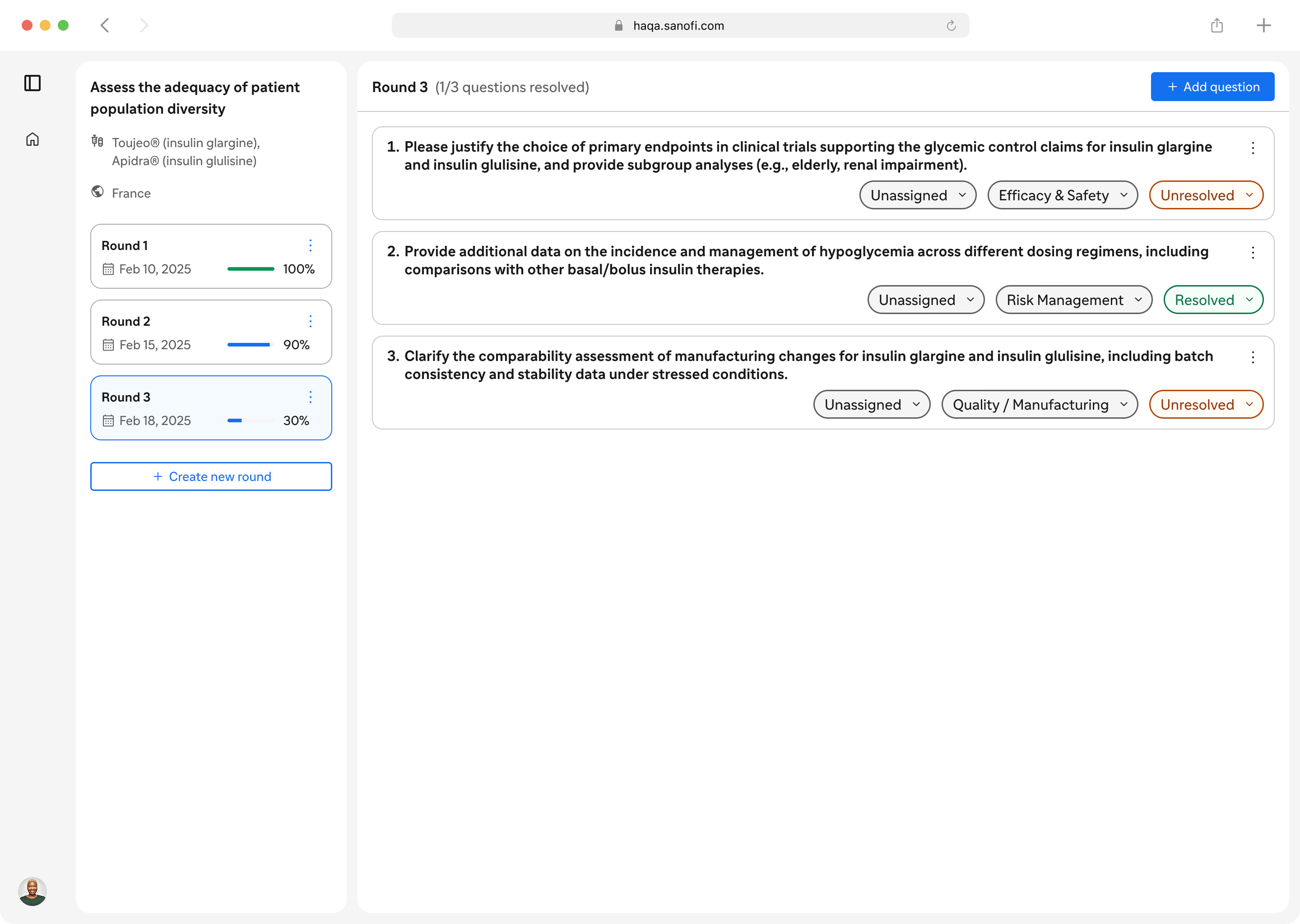
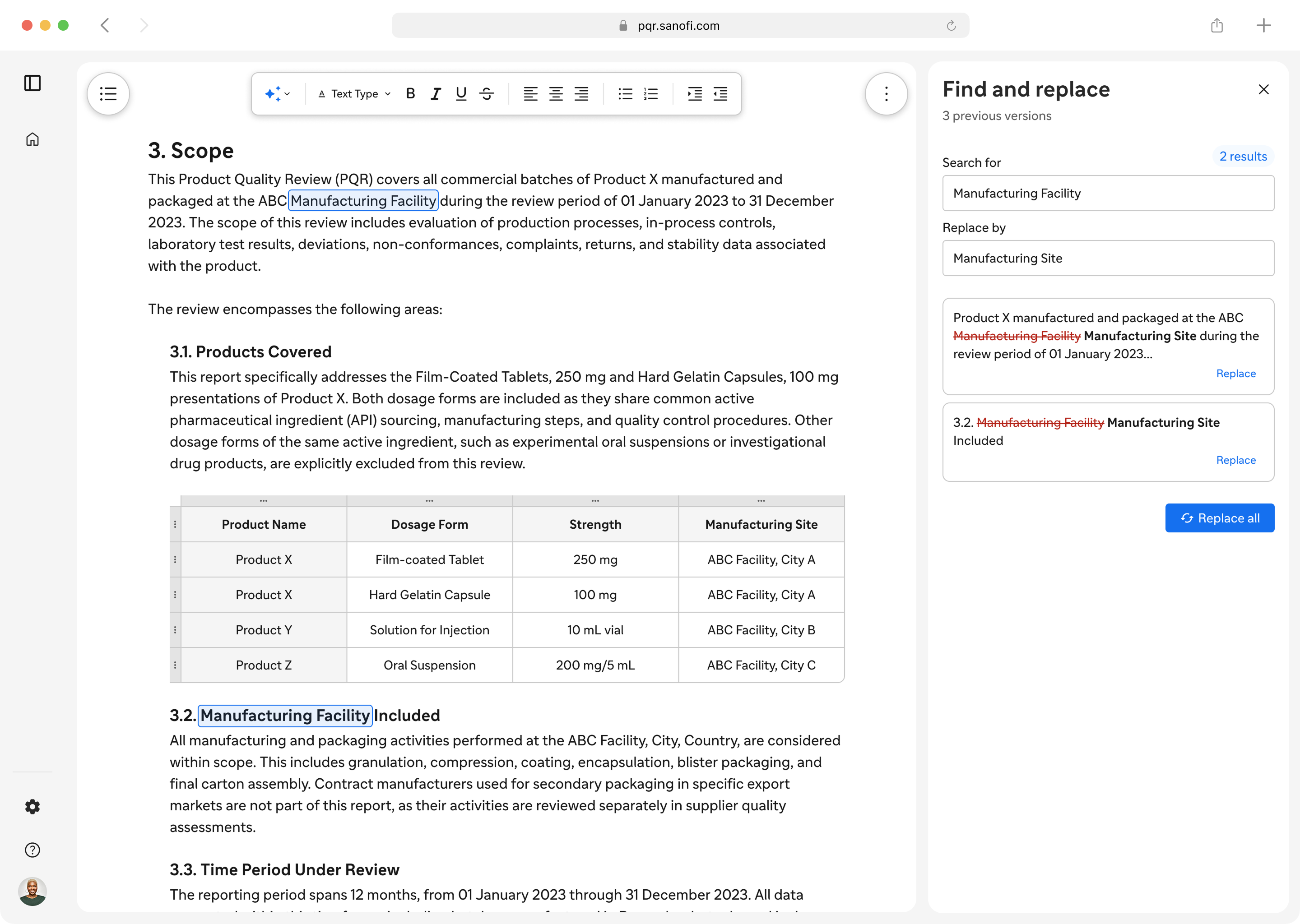
Each feature was scoped to solve an immediate product need. But with five teams building in parallel and more products coming, I designed every solution to be adaptable. Not over-engineered for hypothetical futures, just flexible enough to be reused without major rework.
Discovery and validation
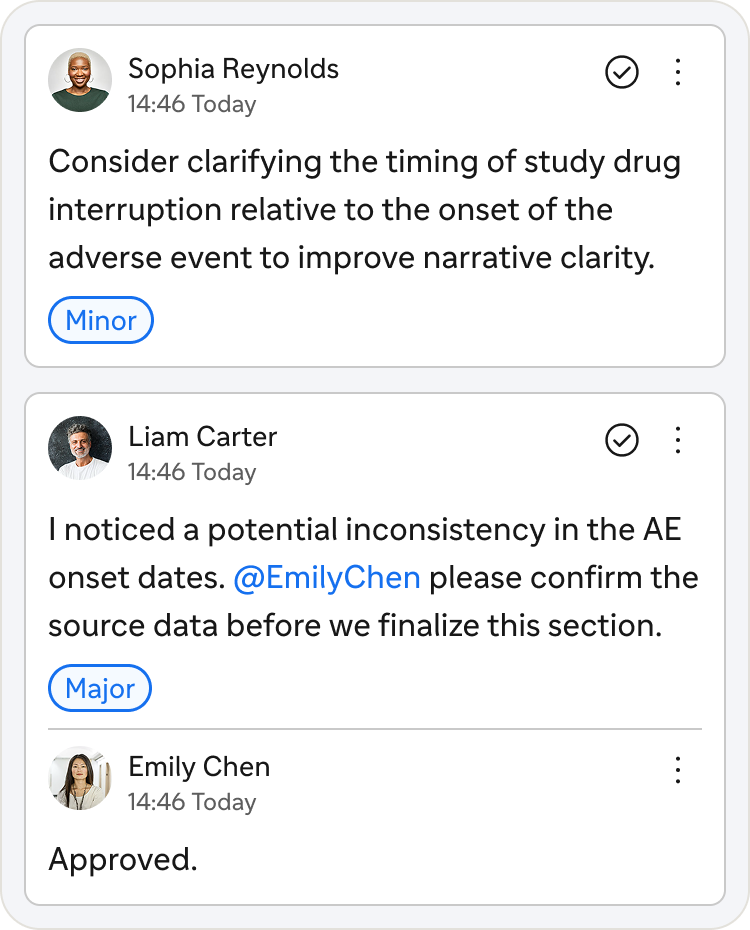
Every two weeks, I ran sessions with medical writers directly. The goal was twofold: understand how they actually worked, and pressure test decisions as they took shape. Product owners had a view of the problem, but the writers had the ground truth. Those sessions kept the two aligned.
Aligning with stakeholders
Once designs reached a mature stage, I brought in business stakeholders for early sign-off. Getting alignment before handoff reduced last-minute changes and kept delivery on track across five parallel workstreams.
From Marketing to Product-Ready Library
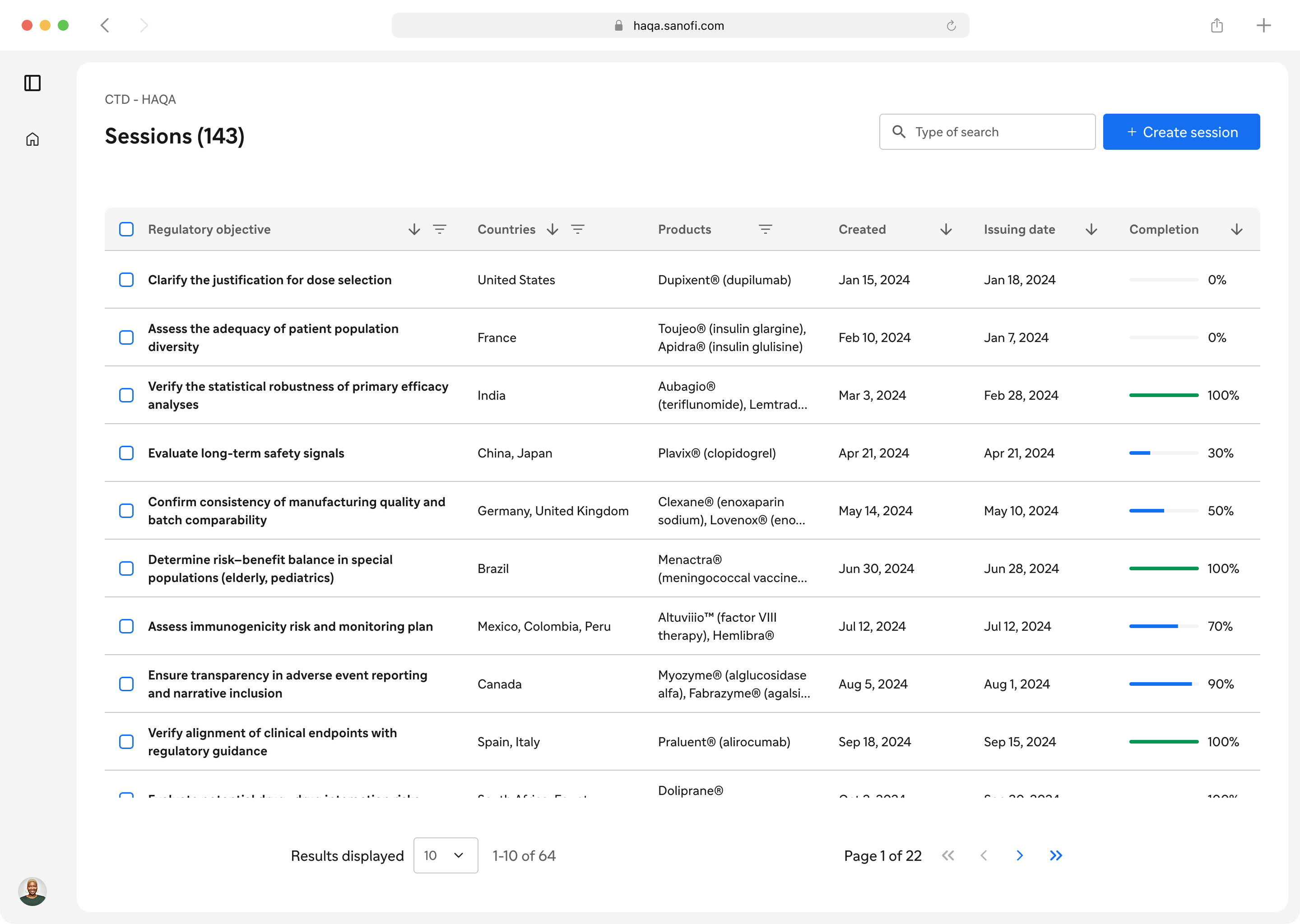
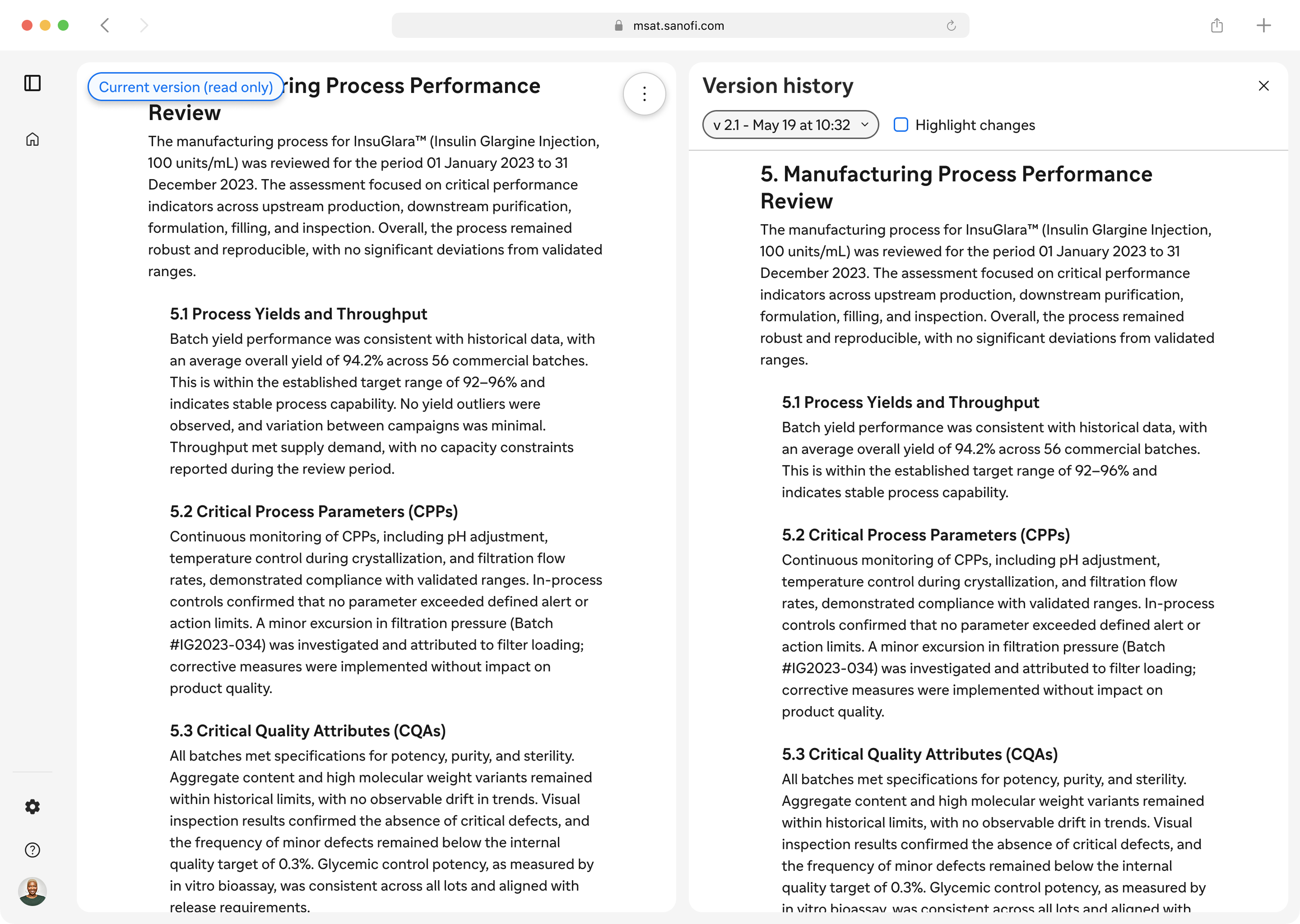
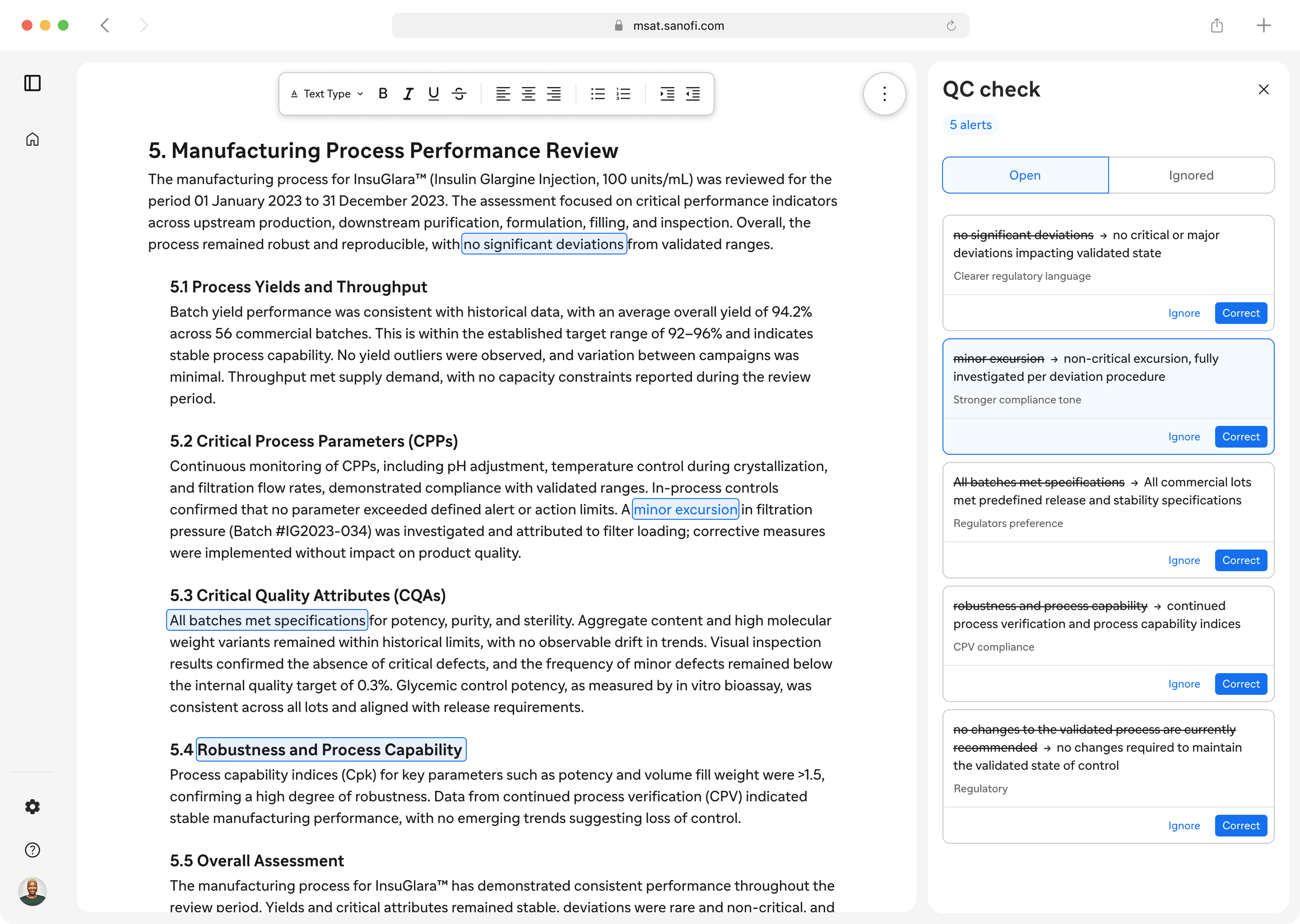
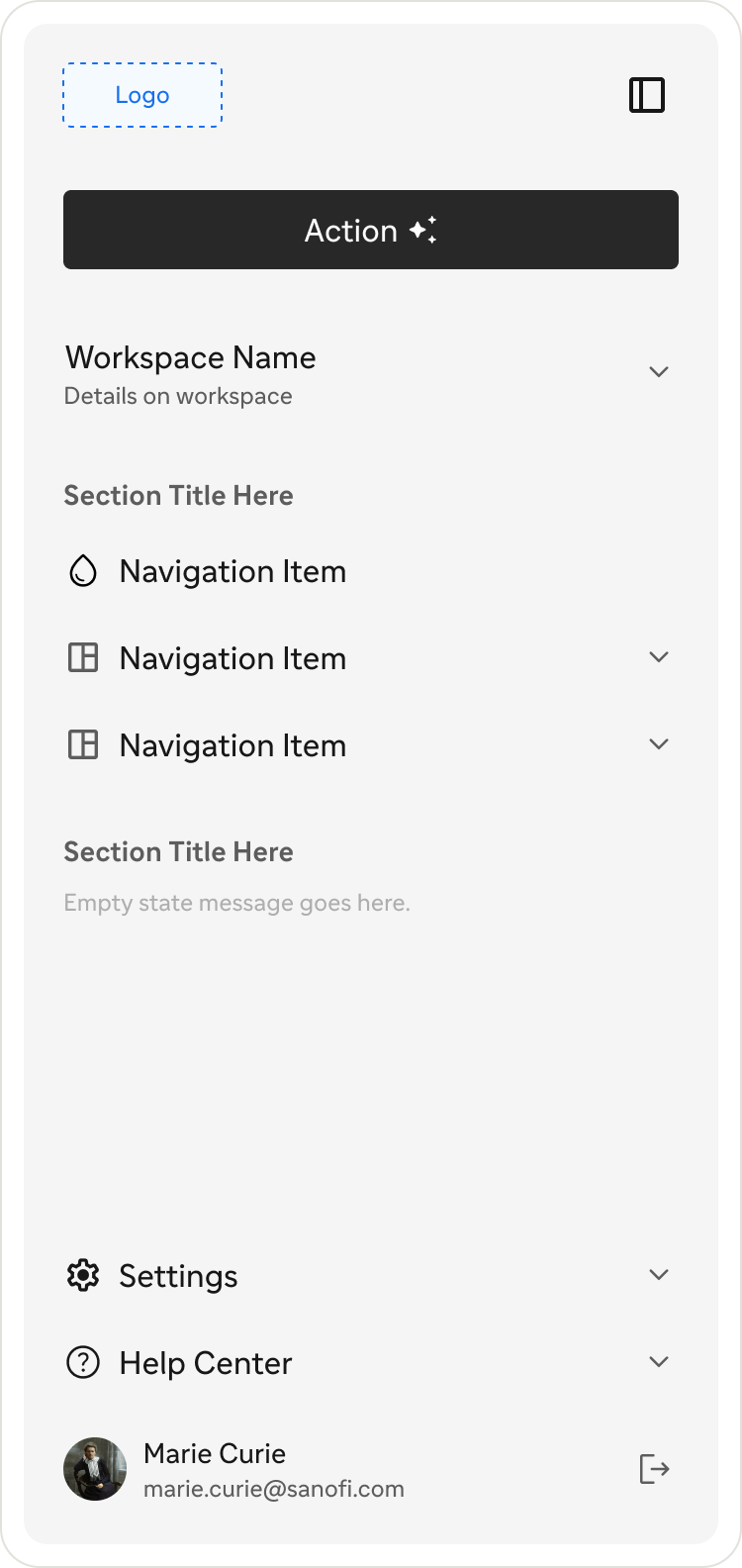
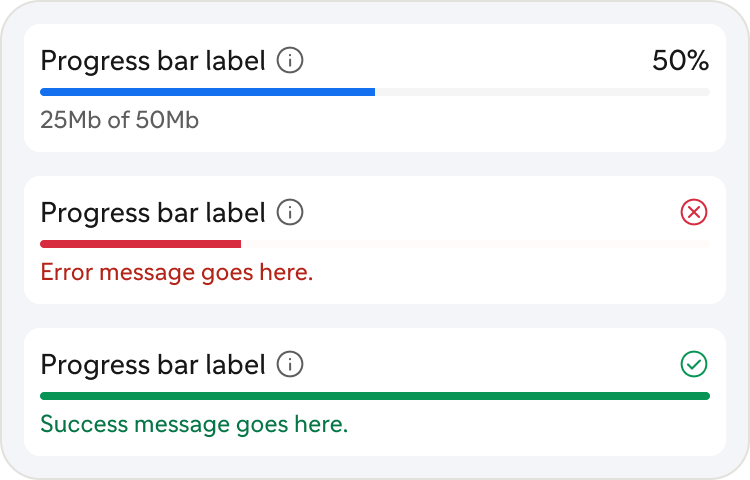
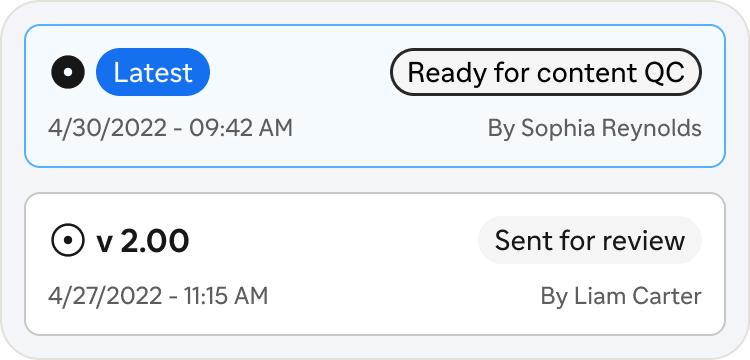
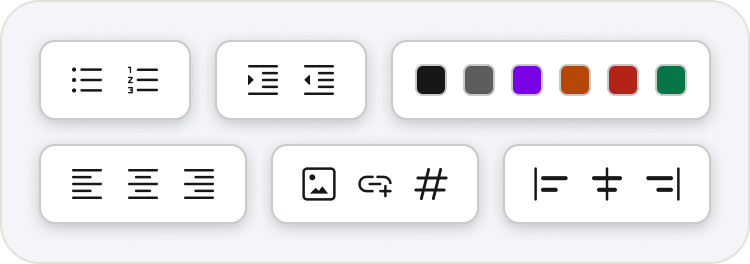
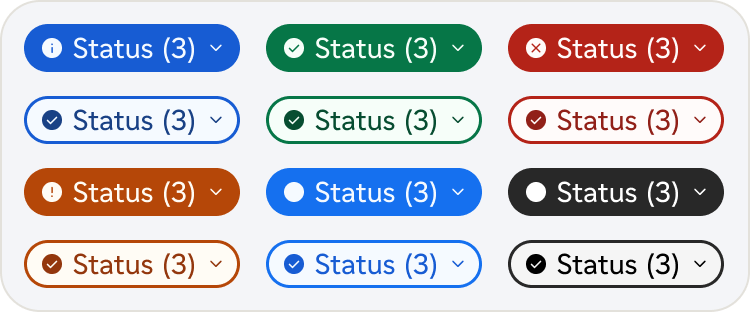
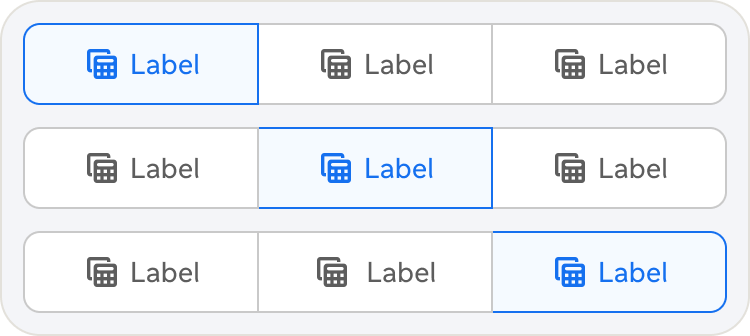
Sanofi had a design system built for marketing websites. It wasn’t made for product. I built the component library from scratch, shaped by the real needs coming out of each team’s product work. Regular syncs across the AI initiatives meant decisions were shared early and patterns stayed consistent. By the time I rolled off, the library was production-ready and being used by designers across initiatives I hadn’t been part of.

Project launch result:

46% faster document delivery

Across different document types, completion time dropped by 30 to 80%. The average landed at 46% faster, with the biggest gains on the longest, most complex documents.


11 plug-and-play features delivered

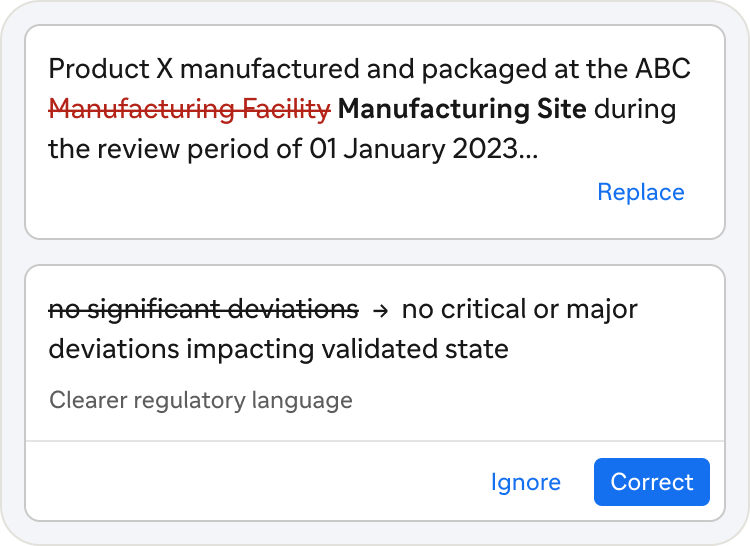
Each feature was designed to work across multiple AI products without redesign or redevelopment. Teams could pick what they needed and ship faster without starting from scratch.

Other projects

Alpakas

Turning order friction into a growth lever

Get Your Guide

Elevating user reviews