Turning order friction into a growth lever

My role
Lead UX & Product Designer
Timeline
Q4 2022 - Q1 2023
Company stage
Early stage · pre-series A
Team
Head of Product (co-founder), Product Designer (me), 4 engineers team
Context
Alpakas had shipped an MVP in fast grocery delivery and was growing. But two things were slowing them down: customers couldn’t edit orders after checkout, so support volume was climbing, and a recent rebrand had left the app visually out of sync with every other touchpoint. I came in to fix both, and to build the design foundation that would let the team keep shipping without accruing more debt.
The problem
A broken loop between customers and their orders
Support tickets kept surfacing the same request: add something to an existing order before it ships. The app couldn’t do it. Customers called support, support handled it manually, and order value stayed flat. A solvable problem absorbing disproportionate cost.
Trust signals were pulling in different directions
A recent rebrand had updated the website and marketing materials but hadn’t reached the app. For new customers moving between touchpoints, the product felt unfinished. In a market built on trust, that gap had real consequences.
Framing
Fix the foundation first, then build the feature on top of it. Every screen Open Orders touched would get updated in the same pass: closing the rebrand gap and shipping the feature in one motion instead of two.

Goals

Open Orders: reduce friction, grow order value
Customers needed a way to update orders without contacting support. Solving that in-app would remove a recurring friction point, free up the customer care team, and create a natural moment to add more to an existing basket.
A consistent product to build trust on
Closing that gap meant the app could finally match what customers had already seen elsewhere. For a young brand, that coherence is what makes repeat purchases feel like a reasonable bet.
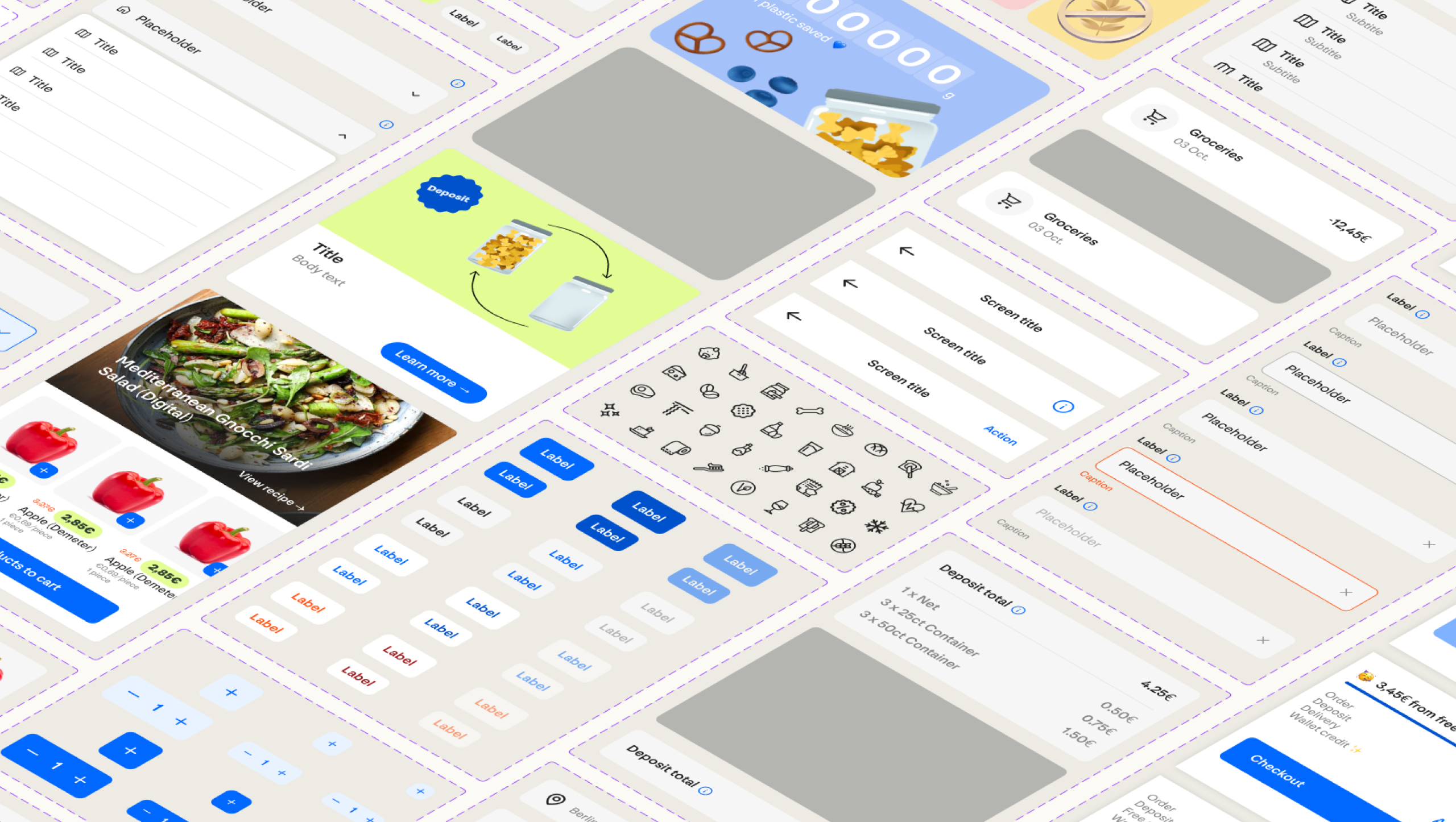
Alpakas’ Design System Foundations
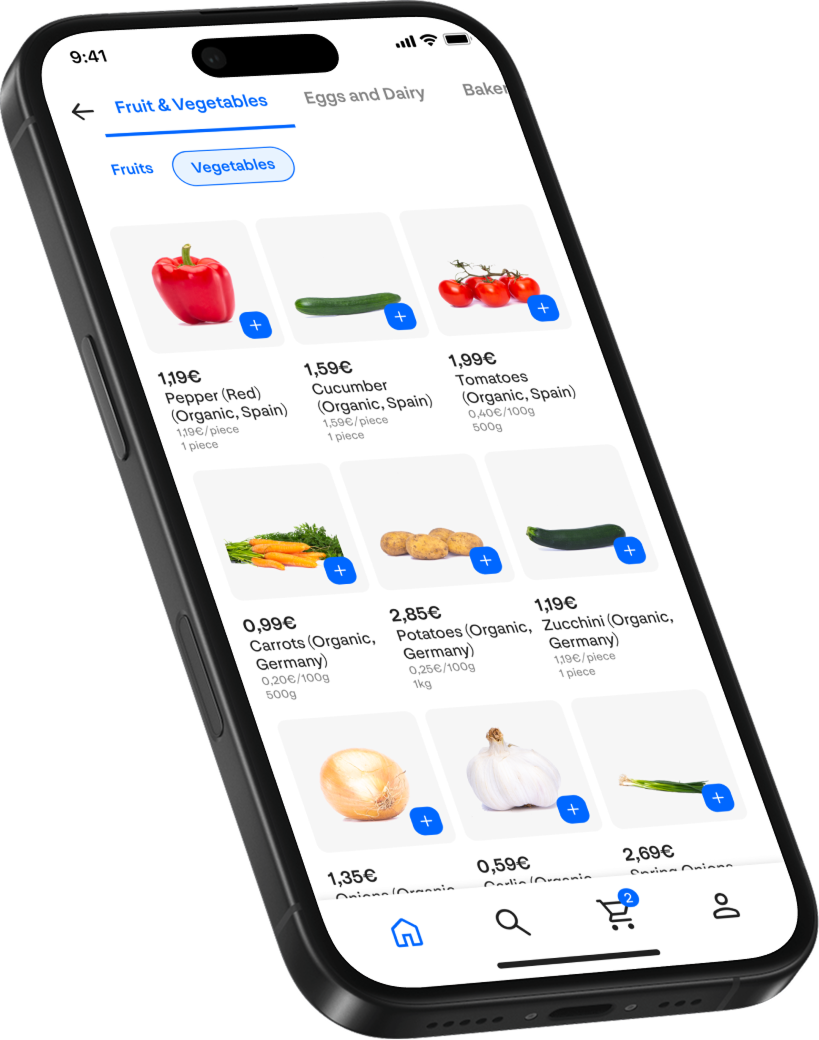
I started with the basics - typography, color, buttons, form fields - and built a component library aligned with the new brand direction. From there, I used the system directly on the Open Orders feature, updating every screen it touched in the same pass.


Open orders: a simple, stress-free way to adjust your delivery before it’s too late

Step 1: Understanding the friction
Users were booking delivery slots in advance, sometimes days ahead, then realizing later they’d forgotten something, or wanting to add more once they’d committed to a slot. Since slots filled up fast, they’d lock one in early and treat the order as a running list. The app had no way to support that. Every addition went through support.

Add items to an existing order without starting over

Track order status in real time

Adjust item quantities before the order ships

Place multiple orders in the same session

Start a new order before the previous one is delivered

Step 2: Mapping the flow
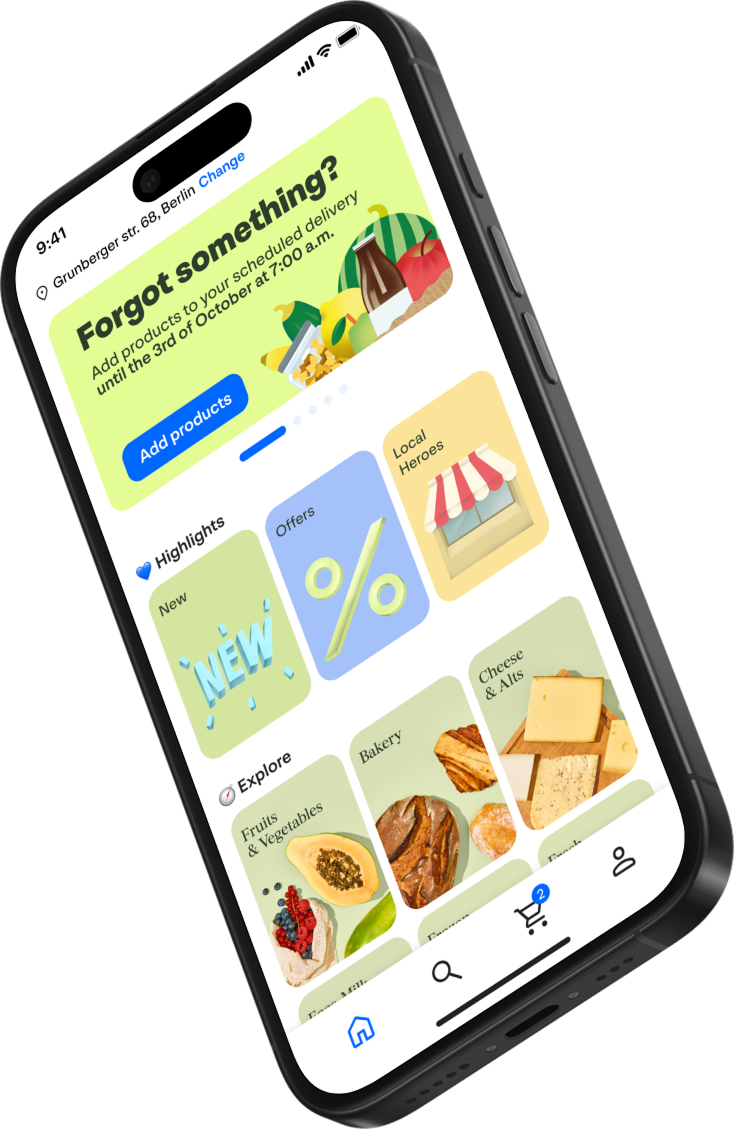
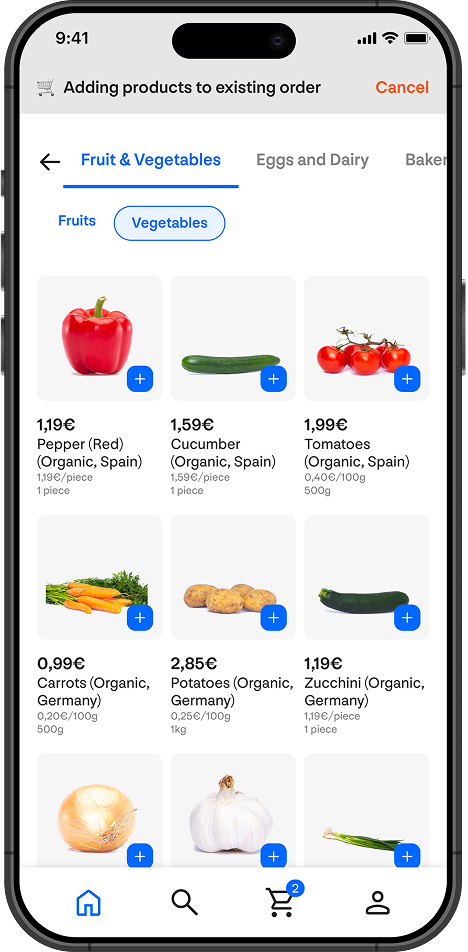
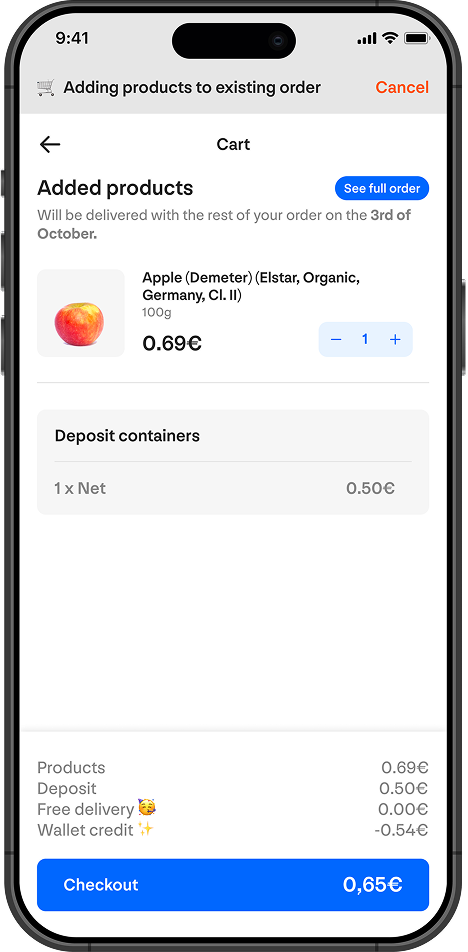
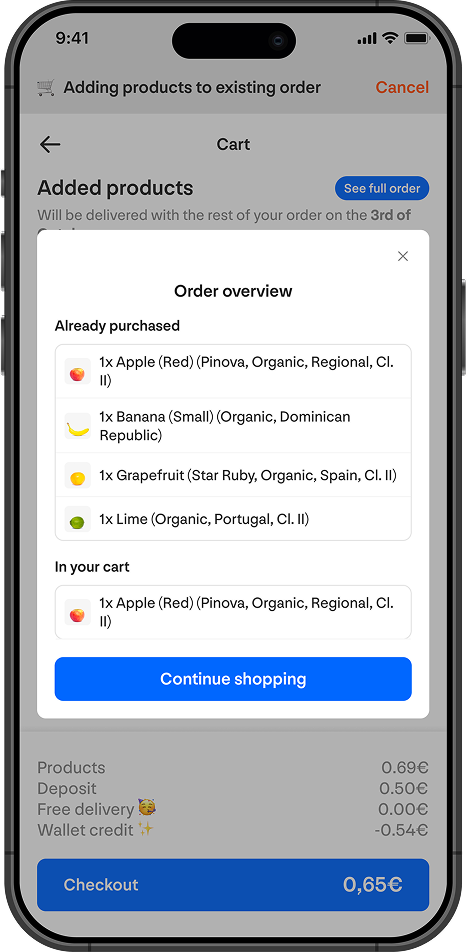
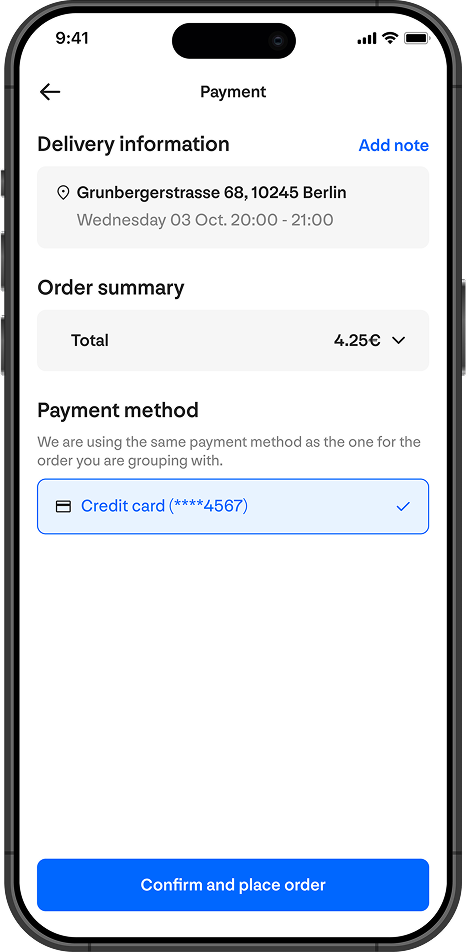
The main design challenge was access. A user might remember they wanted to add something at any point: opening the app, browsing, or already in the cart. I mapped entry points at each of those moments so no one hit a dead end, and made sure the transition between a regular order and an open order felt natural rather than like a mode switch.
User flow: opening the app, adding to existing order or starting new order, browsing catalog, merging with existing order, cart view and order placement
Step 3: Reducing risk before shipping

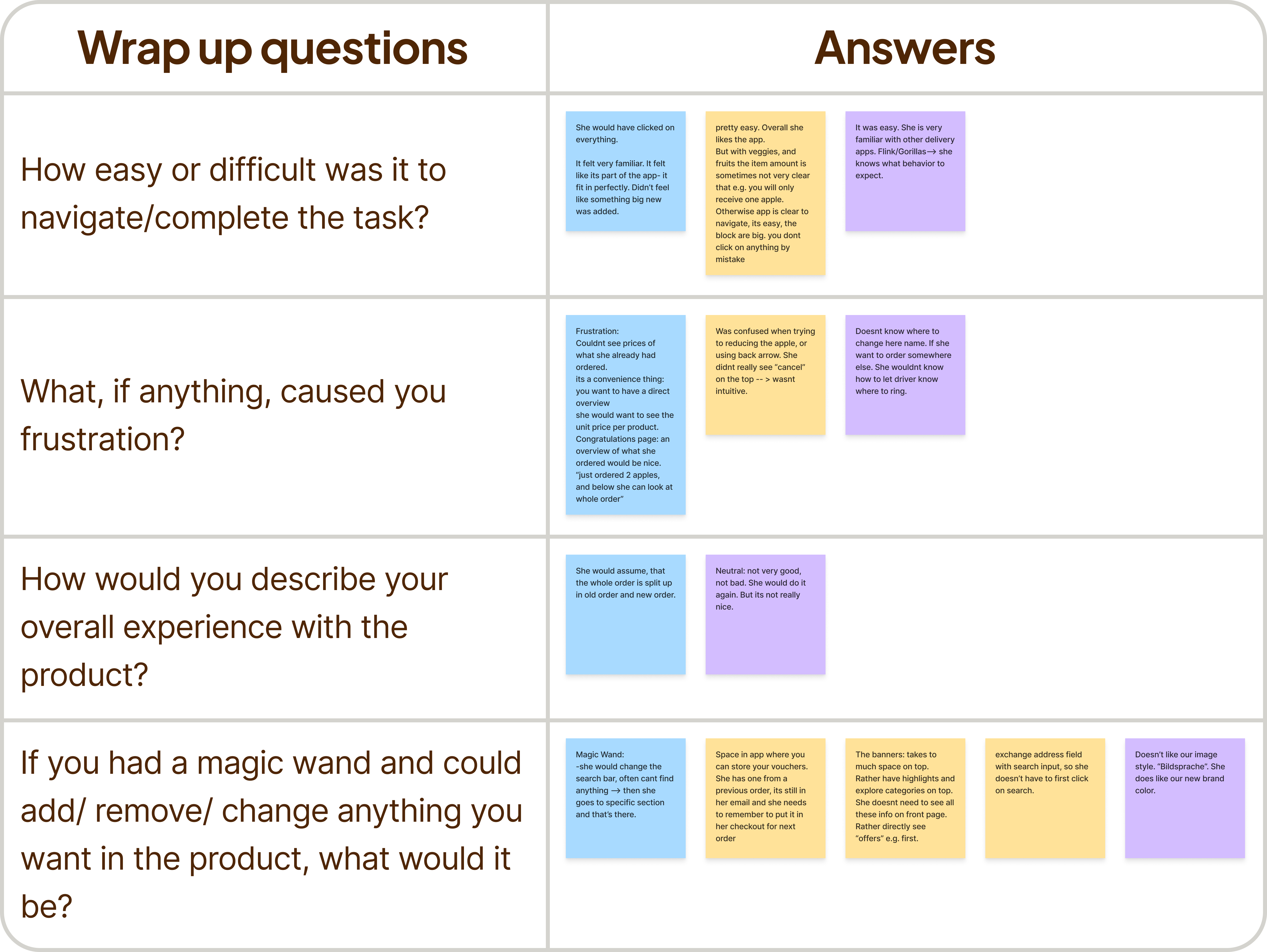
Before finalizing, I tested the flow with a small group of high-frequency users, the kind who’d actually use this feature. The goal was to reduce risk: confirm the flow made sense without hand-holding, and catch anything the designs weren’t communicating clearly. It also surfaced ideas we hadn’t considered, directly from the people most invested in the product.
Step 4: Final designs
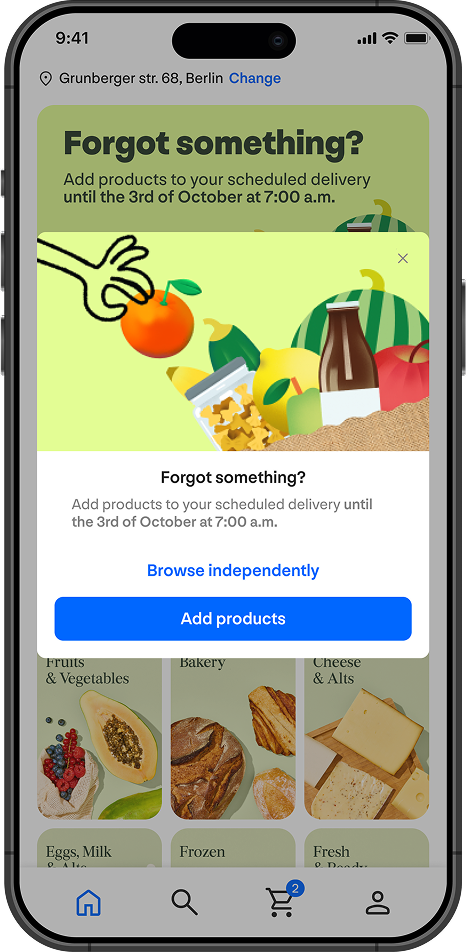
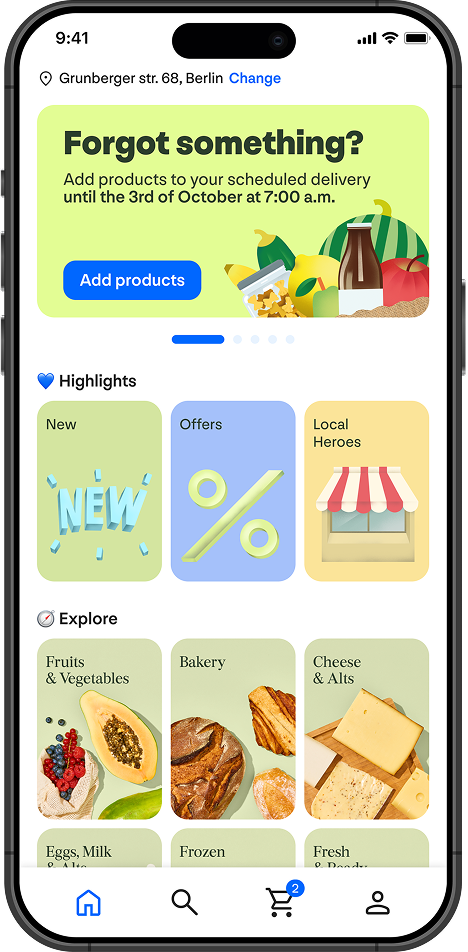
The shipped feature covered the full scope: adding items, adjusting quantities, real-time order status, and overlapping orders.

Results

−25% support tickets in month one

Most of those tickets were order change requests. Once customers could handle it themselves, volume dropped immediately.

+8% average order value

Giving customers more time to add to an existing order turned a logistical fix into a revenue driver.

Faster feature delivery

Design systems typically reduce handoff time by 25-30%. Building on a shared component library meant less back-and-forth with engineering and fewer decisions made twice.

Other projects

Get Your Guide

Elevating user reviews

Sanofi

Designing GenAI-Powered Tools at Scale